Canine Raw Food Meal PlanS
At The Holistic Canine, we believe your dog deserves more than a one-size-fits-all diet. That is why we create custom raw food meals designed specifically for your dog’s unique needs, preferences, and health goals. Whether your pup needs support with allergies, digestion, weight, energy levels, or overall wellness, our nutrient-rich, whole food recipes are crafted to nourish from the inside out…tailored specially for your dog. No guesswork. No fillers. Just real food for real results. All recipes meet the nutritional standards and requirements of the National Research Council (NRC) and the Association of American Feed Control Officials (AAFCO).
Why Choose Personalized Raw Dog Food?
Your dog is one of a kind – and their diet should be too! With a personalized raw food nutrition plan, you’re not just feeding your dog, you’re fueling their vitality, longevity, and happiness. Every meal is crafted using whole, nutrient-dense ingredients mindfully chosen to support your dog’s specific health needs, age, breed, and lifestyle. Say good-bye to generic kibble and commercial foods and say hello to real food that makes a real difference.
Benefits of Custom Canine Raw Food Recipes
Not all canine raw food diets are the same – discover the best fit for your dog’s needs and lifestyle. Feeding raw is not one-size-fits-all. Depending on your dog’s health, preferences, and your lifestyle, there are a variety of raw food diets to choose from. Let’s explore!
What Is a Raw Food Diet?
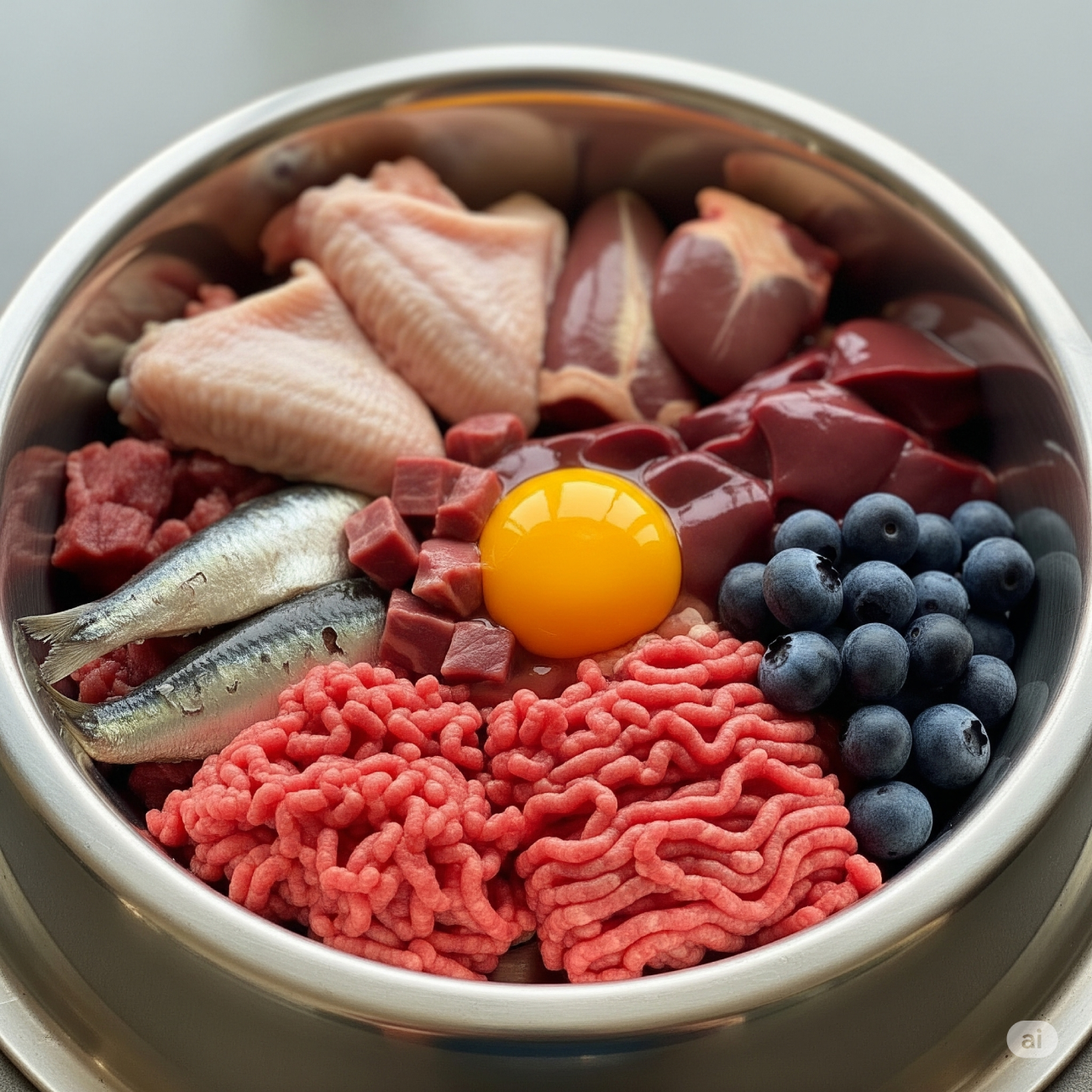
A raw food diet for dogs is a fresh-food nutrition approach that utilizes uncooked, minimally processed ingredients selected to meet a dog’s specific nutritional requirements. This method focuses on providing nutrients in their natural, bioavailable forms, without the heat-related degradation that can occur during cooking or ultra-processing.
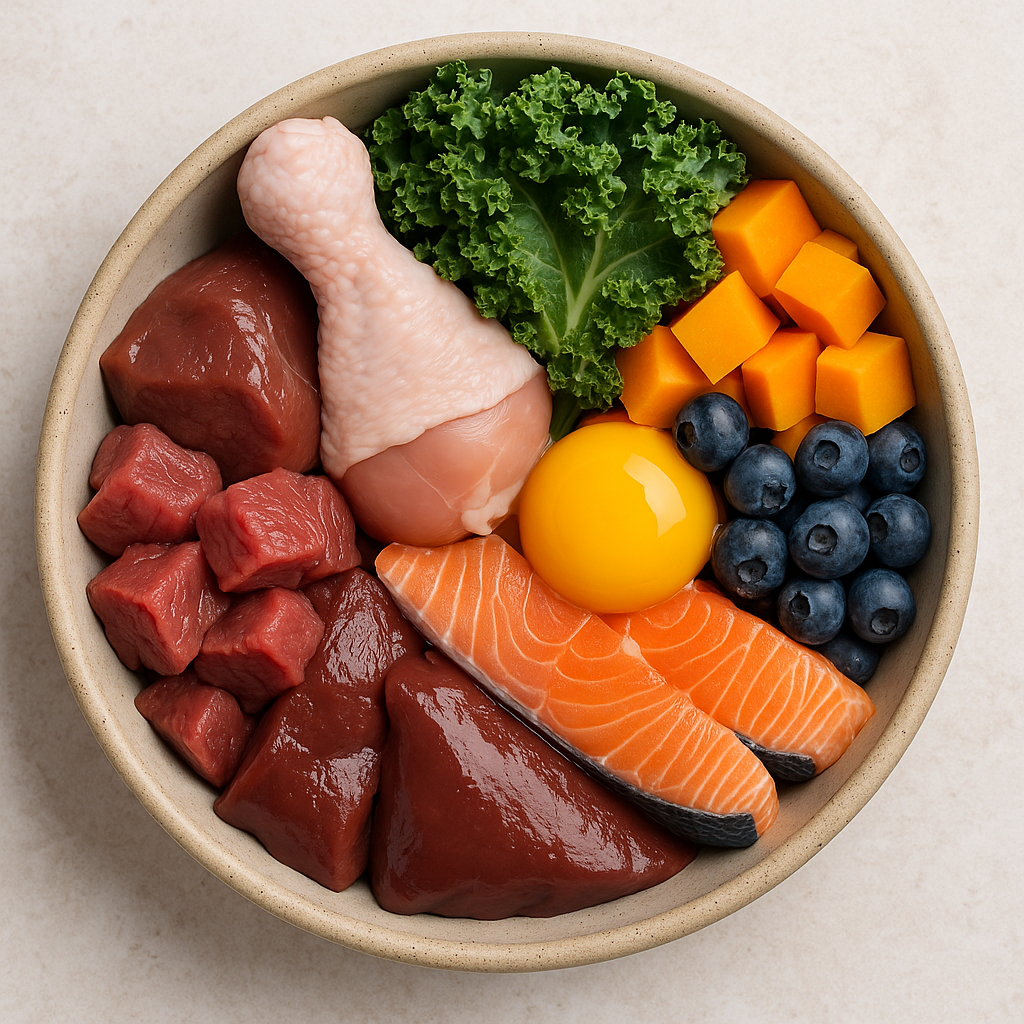
A properly formulated raw diet may include:
-
- Raw meaty bones (e.g., chicken wings, necks, backs; turkey necks)
- Muscle meats (beef, poultry, pork, lamb, etc.)
- Organs and secreting tissues (liver, kidney, spleen, heart, gizzard)
- Fish and seafood (such as sardines or salmon)
- Eggs
- Optional plant components (vegetables, berries, seed butters, and other functional ingredients) when appropriate
When correctly balanced, raw diets can support digestive efficiency, oral health, skin and coat condition, and musculoskeletal health, particularly in dogs with robust digestion, high activity levels, or certain inflammatory or food-sensitive conditions.
One distinct feature of raw feeding is the inclusion of raw meaty bones, which serve as a biologically appropriate calcium source while also supporting dental health and species-appropriate chewing behavior when selected and used safely.
As with all fresh-food approaches, raw diets must be carefully formulated and individualized to ensure nutritional completeness and suitability for the dog’s age, health status, and medical history.
Personalized Raw Dog Food Plans Delivered to Your Inbox
Skip the confusion and overwhelm – get a fresh, customized nutrition plan created just for your dog, sent directly to your inbox. After an assessment via our client intake form, we craft a detailed meal plan based on your dog’s unique needs, complete with ingredient lists, portion guides, and feeding tips and notes. Whether your goal is to support a health condition, maintain optimal weight, or simply provide the best food possible, we make it easy to feed your dog with confidence and care – no guesswork, no stress.
Tailored Raw Meals for Your Dog’s Unique Needs
The Holistic Canine creates recipes and meal plans based on your pet’s age and life stage, weight, activity level, breed, current health and health history, genetic predisposition and markers, and their unique personal preferences.
Prices: Adults: $120
Puppies: $175
**Raw diets are professionally formulated fresh‑food plans and are not commercial products or generic recipes.
Unlock Your Dog’s Health Potential with Raw Food Nutrition
Raw food fuels more than just your dog’s body; it supports their vitality, behavior, and long-term well-being. By feeding whole, natural ingredients instead of ultra-processed kibble, you give your dog the tools to thrive: improved digestion, stronger immunity, healthier skin and coat, and sharper mental focus. Whether you have a growing puppy, an active adult, or a senior needing extra support, fresh food nutrition helps unlock their full potential – naturally and powerfully.
Frequently Asked Questions
Is raw meat good for dogs?
- Biologically appropriate: Dogs are facultative carnivores. It is argued that raw meat closely resembles their natural ancestral diet.
- Digestive health: Raw meat is easier to digest for many dogs than processed kibble.
- Improved coat and skin: Many dogs on raw diets have shinier coats, healthier skin, and less shedding.
- Better dental health: Raw meaty bones can naturally clean teeth and reduce tartar.
- Higher energy levels: A fresh, species-appropriate diet can boost energy and vitality.
Can dogs eat turkey bones?
- Turkey necks
- Turkey wingettes (for medium/large dogs)
- Turkey backs
- Turkey frames (carcass)
Can dogs eat bones?
Yes, dogs can eat bones, but only the right kind of bones and under the right conditions.
Raw, edible bones: These are soft enough to chew and digest. Examples include:
- Chicken wings, backs, necks, and feet
- Duck wings, backs, necks, and feet
- Turkey necks
- Rabbit bones
- Lamb and goat ribs
- Raw meaty bones with flesh still attached
These raw bones provide calcium and phosphorus; promote dental health when fed appropriately; and encourages mental stimulation and chewing instincts
NEVER feed your dog cooked bones. These can splinter and cause choking, mouth injuries, intestinal blockages, or perforations.
Also avoid weight-bearing bones of large animals (raw or cooked) as these bones are too dense and can crack teeth. Examples are:
- Cow femurs
- Knuckles
- Marrow bones
- Always supervise your dog while chewing bones.
- Size matters: The bone should be large enough that it can’t be swallowed whole.
- Introduce slowly: Start with softer bones like chicken wings or backs.
- Balanced diet: Bones are part of a complete raw or fresh diet, not a standalone food.
- Avoid frozen bones for aggressive chewers, as they can be very hard on teeth.
Can I feed my dog raw meat from the supermarket?
- Beef, lamb, pork (safe cuts)
- Chicken, turkey
- Organ meats (liver, kidney, heart)
- Raw meaty bones like chicken necks or wings
These can be part of a balanced raw diet when combined correctly.
Things to consider when purchasing meat from the grocery store.
-
Bacteria Risk
- Grocery store meat is meant to be cooked, not eaten raw, so it may have higher bacterial loads.
- Dogs usually handle bacteria like Salmonella well, but proper hygiene is still important.
- Wash hands, surfaces, and bowls thoroughly.
-
Do Not Feed Seasoned or Marinated Meats
- Avoid anything with salt, garlic, onions, sauces, or spice rubs — these can be toxic to dogs.
-
Avoid Enhanced or “Injected” Meats
- Skip meat labeled as “enhanced with a salt solution” or “pre-brined” — it can contain too much sodium and preservatives.
-
Nutritional Balance
- Grocery meat alone (muscle meat only) is not complete for dogs.
- Dogs need a mix of:
- Muscle meat (about 80%)
- Raw edible bone (about 10%)
- Organ meat (about 10%)
- Plus nutrients like omega-3s, iodine, vitamin E, zinc, manganese, etc.
So, yes, you can feed raw grocery store meat, but it needs to be part of a properly balanced raw diet, not just meat alone. Feeding only muscle meat will cause nutrient deficiencies over time.